Once again, we are witnessing shutdown politics in Congress. Controversy this time mostly surrounds the $4 trillion disaster relief budget. More information on these proceedings can be found here: http://www.suntimes.com/news/nation/7884636-418/government-on-brink-of-shutdown-again.html
An article appeared in the Washington Post in March after Republicans proposed the "Government Shutdown Prevention Act," which stated that congressmen would not receive pay while the government was shut down. The article can be found here: http://www.washingtonpost.com/blogs/2chambers/post/is-the-government-shutdown-prevention-act-constitutional/2011/03/31/AFdkyvBC_blog.html
In light of what we have been discussing with the Constitution, what are some thoughts on the idea of government shutdown? What would the Constitution's framers have thought about the government shutting down because of controversy surrounding budget?
Showing posts with label Constitution. Show all posts
Showing posts with label Constitution. Show all posts
Monday, September 26, 2011


Wednesday, November 11, 2009
Elections
Regulation of elections
- State administration of elections
- Just two make things complicated, the federal government has an Election Assistance Commission, a Federal Election Commission, and a Voting Section of the Civil Rights Division of the Department of Justice
- Federal contribution limits -- but note constraints of First Amendment

Wednesday, November 4, 2009
Elections and the Constitution
As you read chapters 11 and 12 in Amar, think of the linkage between constitutional amendments and elections:
Amendment XVI
The Congress shall have power to lay and collect taxes on incomes, from whatever source derived, without apportionment among the several states, and without regard to any census or enumeration. Taxes are a major issue in campaigns.
Amendment XVII
The Senate of the United States shall be composed of two Senators from each state, elected by the people thereof, for six years; and each Senator shall have one vote. The electors in each state shall have the qualifications requisite for electors of the most numerous branch of the state legislatures.
When vacancies happen in the representation of any state in the Senate, the executive authority of such state shall issue writs of election to fill such vacancies: Provided, that the legislature of any state may empower the executive thereof to make temporary appointments until the people fill the vacancies by election as the legislature may direct.
This amendment shall not be so construed as to affect the election or term of any Senator chosen before it becomes valid as part of the Constitution.
Senate elections have unique characteristics. Also note the provision on appointments. Currently, six senators (Bennet of Colorado, Burris of Illinois, Gillibrand of New York, Kaufman of Delware, Kirk of Massachusetts, LeMieux of Florida) hold office as a result of gubernatorial appointment to fill a vacancy. All except LeMieux are Democrats. Only Bennet and Gillibrand are seeking election in their own right.
Amendment XVIII (Prohibition) and Amendment XXI (Repeal) were big issues in their day.
Amendment XIX
The right of citizens of the United States to vote shall not be denied or abridged by the United States or by any state on account of sex.
Congress shall have power to enforce this article by appropriate legislation. Ponder the gender gap.
Amendment XX
This amendment greatly shortened the "lame duck" period after the presidential election, which was a huge problem in 1933.
Amendment XXII
Former president Bill Clinton said Monday that, without term limits, he would have stayed in the job "until I was carried away in a coffin, or defeated in an election."
Amendment XXIII
A number of electors of President and Vice President equal to the whole number of Senators and Representatives in Congress to which the District would be entitled if it were a state, but in no event more than the least populous state; they shall be in addition to those appointed by the states, but they shall be considered, for the purposes of the election of President and Vice President, to be electors appointed by a state; and they shall meet in the District and perform such duties as provided by the twelfth article of amendment.
A solid three electoral votes for the Democrats
Amendment XXIV
Poll taxes had disenfranchised the poor and minorities.
Amendment XXV further raised the prominence of the vice presidency and thus, vice presidential candidates.
Amendment XXVI
Look what happened to voter turnout when the amendment became effective.
Amendment XXVII
No law, varying the compensation for the services of the Senators and Representatives, shall take effect, until an election of Representatives shall have intervened.
Congressional pay is a hardy perennial among election issues.
Wednesday, October 7, 2009
Presidential Immunity from Prosecution While in Office
Re: Criminal prosecutions of top executive officials
Recent scandals in Italy bring to the forefront the difference between the American Constitution and those of other countries. Amar says that the "basic structure [of the Constitution...affords] a sitting president temporary immunity from ordinary criminal prosecution during his term of office." The New York Times reports, however, that the Constitutional Court of Italy ruled unconstitutional an Italian law "granting the nation’s four highest office holders immunity from prosecution while in office." The court declared that the law "[violated] the clause in the [Italian] constitution granting citizens equality under the law."
The law in question has been in contention since Prime Minister Silvio Berlusconi passed it through Parliment in 2008. The New York Times reports that "lawyers for Mr. Berlusconi argued that the prime minister could not govern if he was constantly fighting his own legal battles," a nod to the fact that the Prime Minister is the defendant in several corruption trials. Amar's statement that an American president receives immunity because he is "expected to preside continuously" complements this argument. Unlike in Italy, however, the American president is "vested with the powers of an entire branch" (emphasis mine). Italy has both a President of the Council of Ministers (i.e. the Prime Minister) and a President of the Republic.
Monday, September 21, 2009
The Constitution I
If you like Amar's book, you can watch him talk about it on video here.
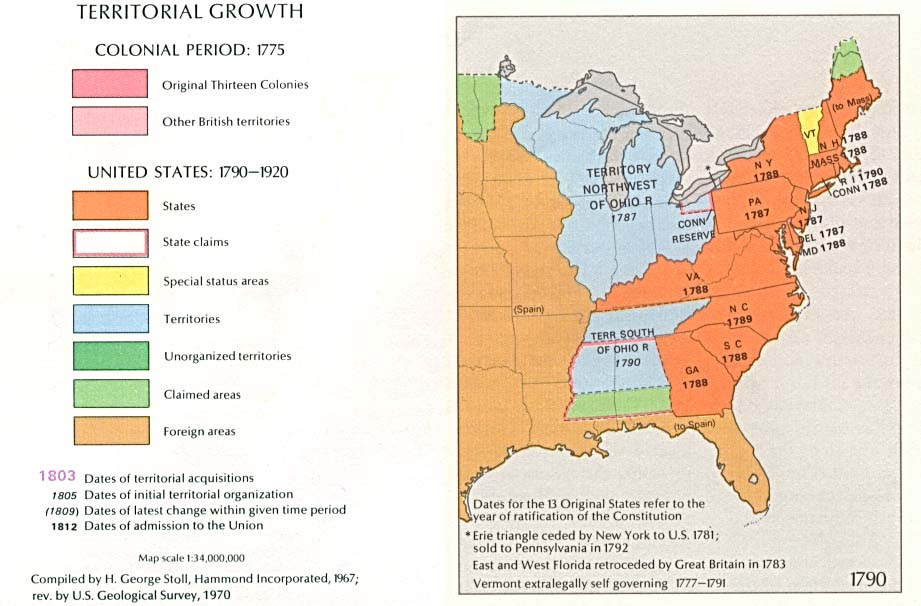
The Great Compromise:
Read these provisions from an actual constitution. How would you appraise them?
ARTICLE 118. Citizens have the right to work, that is, are guaranteed the right to employment and payment for their work in accordance with its quantity and quality. ...
ARTICLE 119. Citizens have the right to rest and leisure. The right to rest and leisure is ensured by the reduction of the working day to seven hours for the overwhelming majority of the workers, the institution of annual vacations with full pay for workers and employees and the provision of a wide network of sanatoria, rest homes and clubs for the accommodation of the working people.
ARTICLE 120. Citizens have the right to maintenance in old age and also in case of sickness or loss of capacity to work. This right is ensured by the extensive development of social insurance of workers and employees at state expense, free medical service for the working people and the provision of a wide network of health resorts for the use of the working people.
ARTICLE 121. Citizens have the right to education. This right is ensured by universal, compulsory elementary education; by education, including higher education, being free of charge; by the system of state stipends for the overwhelming majority of students in the universities and colleges; by instruction in schools being conducted in the native language...
ARTICLE 122. Women are accorded equal rights with men in all spheres of economic, state, cultural, social and political life. The possibility of exercising these rights is ensured to women by granting them an equal right with men to work, payment for work, rest and leisure, social insurance and education, and by state protection of the interests of mother and child, prematernity and maternity leave with full pay, and the provision of a wide network of maternity homes, nurseries and kindergartens.
ARTICLE 123. Equality of rights of citizens irrespective of their nationality or race, in all spheres of economic, state, cultural, social and political life, is an indefeasible law. Any direct or indirect restriction of the rights of, or, conversely, any establishment of direct or indirect privileges for, citizens on account of their race or
nationality, as well as any advocacy of racial or national exclusiveness or hatred and contempt, is punishable by law.
ARTICLE 124. In order to ensure to citizens freedom of conscience, the church is separated from the state, and the school from the church. ...
ARTICLE 128. The inviolability of the homes of citizens and privacy of correspondence are protected by law.
Contrast the US Constitution with the Confederate Constitution.
Subscribe to:
Posts (Atom)